

Antarctica polar icecap
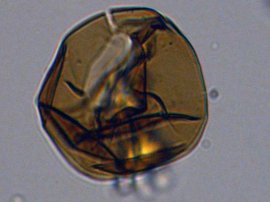 A typical, easy dinoflagellate from the very early Oligocene epoch and found in 33 million year-old sediments. Origin: IODP
The Antarctic continental ice cap had become during the Oligocene epoch, some 33.6 million years ago, based on information from an international expedition led because of the Andalusian Institute of Earth Sciences (IACT)—a Spanish nationwide Research Council-University of Granada joint center. These results, according to information contained in ice sediments from various depths, have recently been posted within the journal Science.
The Integrated Ocean Drilling Program intercontinental journey features gotten this information from paleoclimatic history preserved in sediment strata when you look at the Antarctic depths. IACT researcher Carlota Escutia, who led the journey, describes that "the fossil record of dinoflagellate cyst communities reflects the substantial decrease and specialization of those species that happened once the ice cap became set up and, along with it, marked regular ice-pack formation and melting started".
The appearance of the Antarctic polar icecap marks the start of plankton communities being nevertheless working these days. This ice-cap is linked to the ice-pack, the frozen part that vanishes and reappears as a function of regular climate modifications.
This article reports whenever the ice-pack melts because the Antarctic summertime approaches, this marks the rise in primary productivity of endemic plankton communities. When it melts, the ice frees the vitamins it offers built up that are used by the plankton. Dr Escutia says "this event influences the characteristics of international main productivity".
Iceberg in coastal seas off Antarctica. Photo drawn in 2010. Supply: IODP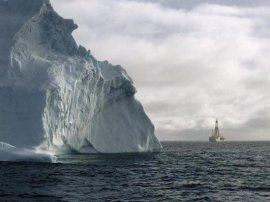 Since ice very first extended across Antarctica and caused the dinoflagellate communities to specialize, these types being undergoing constant change and development. But the IACT specialist thinks "the great change emerged once the species simplified their particular type and discovered they were obligated to adjust to the brand new climatic problems".
Pre-glaciation sediment contained very varied dinoflagellate communities, with star-shaped morphologies. When the ice appeared 33.6 million years back, this variety was limited and their particular task put through the brand new seasonal weather.
Explore further: Sea-ice ecosystem perhaps triggered development of baleen whales and penguins
Additional information: Alexander J. P. Houben, Peter K. Bijl, Jörg Pross, Steven M. Bohaty, Sandra Passchier, Catherine E. Stickley, Ursula Röhl, Saiko Sugisaki, Lisa Tauxe, Tina van de Flierdt, Matthew Olney, Francesca Sangiorgi, Appy Sluijs, Carlota Escutia Henk Brinkhuis plus the journey 318 experts. Reorganization of Southern Ocean Plankton Ecosystem on Onset of Antarctic Glaciation. . DOI: 10.1126/science.1223646
Share this article
Related Posts

Latest Posts


