

Map of Chichen Itza
The Annals of Chichén Itzá
The History of Chichén Itzá
Mayan for "near the well for the Itzá, " Chichén Itzá was created around advertising 450 by Mayan tribes migrating from the south and is believed to have remained busy long after they left. Analysis shows that Toltec tribes from the main Mexican highlands in addition went to this section of Yucatán in the seventh century, mingling utilizing the resident Maya. The merging of those higher level civilizations triggered a renaissance of Mayan structure in which Toltec affects dominated, causing Chichén Itzá's remarkable similarity towards the old Toltec capital of Tollán. During the time of the Spanish Conquest in 1533, Chichén Itzá ended up being virtually uninhabited, though it remained a place of pilgrimage. Because of the 19th century, the site had become somewhere of an alternate kind of pilgrimage as archaeologists from around society visited and unearthed several of its most significant frameworks. Chichén Itzá's archaeological area covers eight-square kilometers, only several of which has been excavated.
The Chacmools regarding the Northern Ruins
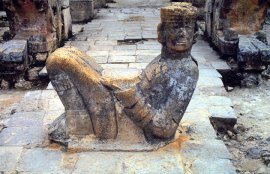
The Chacmools associated with the Northern Ruins
Toltec influences at Chichén Itzá tend to be principally present in the buildings getting back together the north team, like the web site's popular Chacmools, statues of reclining figures keeping sacrificial vessels along with their minds looked to one side that served as temple guardians. Other significant Toltec statues tend to be Los Atlantes, stone carvings of warriors supporting the web site's temple roofs and altars. You will also see numerous references towards the plumed serpent, Kukulkán, alongside scenes of battles and sacrifices, which appear far more often here than is usual in Vintage Maya art.
 2 El Castillo: The Pyramid of Kukulkán
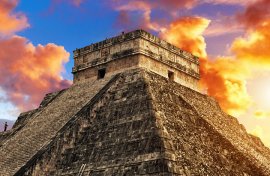
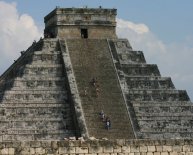
El Castillo: The Pyramid of Kukulkán
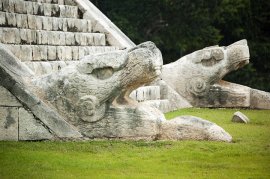
The Pyramid of Kukulkán (El Castillo) dominates the north part of the site and had been built-in accordance with rigid astronomical and astrological principles. Standing 30 meters large, this excellently restored four-sided pyramid impresses along with its classic efficiency. Significant features consist of its nine-tier terracing and four stairways, one on each part, symbolizing the nine heavens plus the four things associated with the compass. In addition of interest will be the huge serpent minds within legs associated with the stairways leading to the top of platform on which the specific Temple of Kukulkán stands, its main entry flanked by a couple of Toltec serpent articles (a pure Mayan-style temple had been found beneath the temple, crowning an even older pyramid).
For a unforgettable knowledge, make an effort to prepare your visit to coincide using equinoxes (March 21st and September 21st / 22nd) as soon as the Kukulkán Pyramid becomes the scene of a magnificent shadow show, as the environment sun drops from the corners of El Castillo's nine terraces and casts an undulating shadow onto the west-facing wall surface of this north staircase. Running entirely down the side in terms of the fantastic snake's head on root of the pyramid, the result is of a huge serpent slithering earthwards.
3 Temple of Warriors
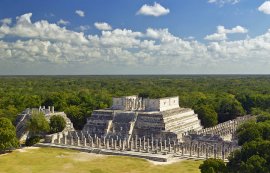
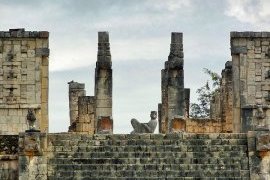
Looking at a system east of El Castillo may be the Temple for the Warriors (Templo de los Guerreros), an impressive structure comprising a few spacious columned halls that unmistakably mimic the bigger form of the Temple for the Morning Star at Tula. Several rows of square pillars guard the root of the stairway, at the top of which squats a Chac-mool. The key temple entrance is once more flanked by two massive serpent columns, minds on the floor and tails pointing skyward. To their rear, four atlantes support a big stone altar where archaeologists revealed the stays of an early on, smaller Temple associated with the Warriors concealed inside the pyramid.
 4 The Hall of the Thousand Columns
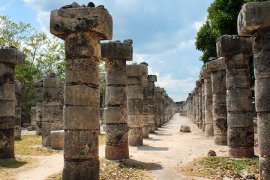
The Hall associated with Thousand Columns
Adjoining the Temple of Warriors on its south-side could be the Hall regarding the Thousand Columns (Grupo de las Mil Columnas), thought to have offered as an internal market or place of set up. Nearby tend to be a small ball judge (Juego de Pelota); the Mercado (marketplace); and a steam bathtub (Temazcalli), that the vestibule, the bathtub it self, additionally the heating space can certainly still be seen.
5 The Tomb of Chacmool
A hundred yards approximately north of El Castillo lies the Tomb of Chacmool (Tumba del Chacmool) where, above 100 years ago, French archaeologist Le Plongeon discovered a stone figure, which he christened Chac-mool. The dwelling can also be known as the Venus system because interesting reliefs featuring both Kukulkán's icon alongside that the Morning Star.
 6 Sacrificial Waters: Cenote Sagrado
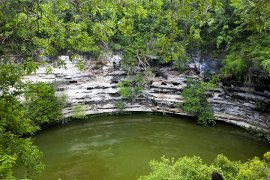
Sacrificial Waters: Cenote Sagrado
North of this Tomb of Chacmool, a six-meter-wide causeway operates for 300 yards on huge sacred cenote - Cenote Sagrado, or Cenote de los Sacrificios - the presence of that was probably the basis for the Maya settling right here. This very nearly perfectly circular normal water hole is 60 yards across, its edges plunging 24 yards toward area of this water below, itself some 82 yards deeply.
From the 7th century until following the Spanish Conquest, the cenote had been a spot of pilgrimage, because of the perspiration bathtub during the liquid's edge providing a ritual purpose, plus times during the drought precious objects as well as real human sacrifices becoming tossed in as choices to your Rain God Chac. Between 1904 and 1907, several exploratory dives were made that discovered 50 individual skeletons - mainly guys and children - with numerous items of porcelain, stone, gold, copper, and jade. Additional research inside 1960s, done at higher depths, delivered to light another 4, 000 such things, some made of copal (resin), along with rubber and wood dolls and human and pet bones.
Tzompantli: The Wall of Skulls
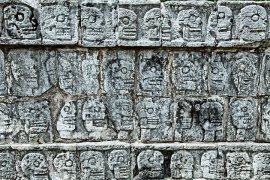
Tzompantli: The Wall of Skulls
Perhaps not definately not Cenote Sagrado is a large square system known as Tzompantli (Náhuatl), the Wall of Skulls. This instead gruesome site served as a base for stakes by which the decapitated minds of individual sacrifices had been impaled, thus the reliefs composed of rows of skulls enhancing the edges. Next to Tzompantli stands a smaller system known as the home associated with the Eagles (Casa de los Aguilas), its stairway adorned with stone serpents and its own walls adorned with reliefs of eagles and jaguars keeping real human hearts inside their claws, symbols for the two orders of Toltec warrior.
8 The Basketball Courts
Like the majority of Mayan urban centers, Chichén Itzá had a number of arenas built for ritual baseball games. Seven such process of law have been discovered, the greatest measuring 146 yards by 37 meters with vertical wall space virtually nine meters large, in the heart of that will be huge stone ring with serpent ornamentation. The overall game included striking a difficult rubber baseball through stone rings only using the shoulder, leg, or hip whilst the baseball, representing the sunlight, wasn't allowed to the touch the bottom lest its symbolic course be interrupted. Transgressions generated the loser being ritually sacrificed, proof which are often observed in the reliefs on panels enhancing the basics associated with the walls showing people being decapitated. Also interesting are the small temples - the Edificio Sur in addition to Templo Norte - specialized in the gods associated with sunlight and Moon.
The Temple regarding the Jaguars
The Temple of this Jaguars
The Temple of this Jaguars (Templo de los Tigres) consumes a platform included in the southeast wall for the ball court and got its title through the created rock pet when you look at the reduced shrine. The upper temple, reached by a steep stairway on side, looks westwards onto the baseball judge. Like in the Temple of this Warriors, serpent columns flank the entry. In addition interesting could be the façade along with its friezes, many which depict jaguars, while nevertheless noticeable inside are murals depicting a battle involving the Maya therefore the Toltec.
Share this article
Related Posts

Latest Posts


