

Photos of Chichen Itza
 You may have come across some spectacular buildings, but have you ever ended to question the reason why they’re built by doing this?
Math and architecture tend to be more closely linked that you may believe, therefore keep reading to realize what’s behind all of it…
The superlatives that explain the Great Pyramid of Giza speaks for it self: its the largest and earliest regarding the three pyramids and had been the tallest man-made framework on earth for 3, 800 years, but there’s additionally loads of math behind the Seven Wonders associated with Ancient World.
Did you know that in cubits (1st recorded product of length), the pyramid’s perimeter is 365.24 – the sheer number of days in the year? Your pyramid’s perimeter divided by twice its level is equivalent to pi (3.1416)? Or that the King’s Chamber dimensions depend on a Pythagorean triangle (3, 4, 5)?
Sitting securely towards the top of numerous traveler’s wish listings, the Taj Mahal in India is a delight for tourists, with many waiting for that iconic photo before this gorgeous building. But look closer and you’ll get a hold of a great exemplory instance of range balance – with two outlines, one vertical down the middle associated with the Taj, and something over the waterline, showing the representation associated with the prayer towers in liquid…
3) The Eden Project, Cornwall, UK
The Eden Project, in the west England, exposed in 2001 now ranks among the UK’s most widely used attractions. Although site visitors arrived at check out what’s in, the greenhouses – geodesic domes comprised of hexagonal and pentagonal cells – are quite nice too.
 ‘The Core’ had been put into your website in 2005, a knowledge center that shows the relationship between plants and folks. It’s little surprise your building has had its motivation from flowers, utilizing Fibonacci numbers to reflect the nature featured in the web site.
There’s even more math to be found into the building structure, which is produced from phyllotaxis, the mathematical basis for many plant growth (opposing spirals are located in several flowers, from pine cones to sunflower heads).
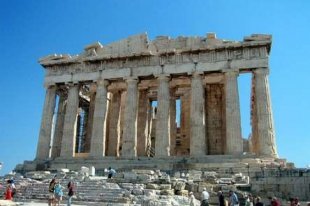
Constructed in 430 or 440 BC the Parthenon ended up being constructed on the Ancient Greek beliefs of balance, demonstrated by the building’s perfect proportions. The width to height proportion of 9:4 governs the straight and horizontal proportions associated with temple as well as other interactions for the building, including the spacing involving the articles.
It’s already been suggested that Parthenon’s proportions are based on the Golden Ratio (found in a rectangle whoever edges tend to be 1: 1.618).
The Ancient Greeks had been resourceful within their quest for beauty – they understood that if they made their columns entirely directly, an optical impression will make all of them appear slimmer in the middle, so they really compensated because of this through their columns a little thicker in the centre.

5) The Gherkin, London, UNITED KINGDOM
The Gherkin’s unusual design functions – the circular building, bulge in the middle, the thin taper at the top and spiraling design – generate an impression in more techniques than you might believe. The cylindrical shape reduces whirlwinds that will develop in the base of huge buildings, something which could be predicted by computer system modeling making use of the.
What’s more, the bulging center and tapered foremost give the impression of a shorter building that doesn’t block out sunlight, helping increase all-natural ventilation and conserving on air conditioning, along with lighting and heating bills. Constructed with assistance from CAD (Computer Aided Design) and parametric modeling, the Gherkin happens to be a unique function in London’s town skyline.
6) Chichen Itza, Mexico
Chichen Itza ended up being built because of the Maya Civilization, who had been called fantastic mathematicians, paid utilizing the inventing ‘zero’ within their counting system. At 78 foot high, the structure of El Castillo (or ‘castle’) within Chichen Itza will be based upon the astrological system.
Some fast realities: the fifty-two panels for each side of the pyramid represent how many many years into the Mayan pattern, the stairways dividing the eighteen tiers match the Mayan diary of eighteen months while the measures within El Castillo mirror the solar power 12 months, with a total of 365 tips, one-step for every single day's the entire year.
7) Sagrada Familia, Barcelona, Spain
Created by Antoni Gaudi, the Sagrada Familia is one of Spain’s top holiday destinations. There’s plenty of mathematics for your smile into also. Gaudi utilized hyperbolic paraboloid structures (a quadric surface, in this instance a saddle-shaped doubly-ruled area, which can be represented by the equation z = x2/a2 – y2/b2), and that can be seen within particular façades.
The Sagrada Familia also features a secret Square within the Passion façade – an arrangement in which the figures in most articles, rows and diagonals soon add up to similar sum: in this instance, 33. The Magic Constant, or M may be the constant amount atlanta divorce attorneys row, column and diagonal and can be represented because of the after formula M = n (n^2 +1)/2.
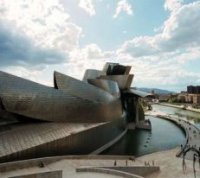
Bilbao may possibly not be the initial location you’d think to visit in Spain, nevertheless Guggenheim Museum truly offers you an excellent excuse to pay for this northern port city a call. Since starting towards general public in 1997, the Guggenheim Museum Bilbao is celebrated as one of the most crucial buildings associated with 20th century also it’s easy to see why.
Meant to mimic a ship, the titanium panels, which appear to be seafood scales, had been made to appear random but really relied on Computer Aided Three Dimensional Interactive Application (CATIA). Indeed, computer simulation made it possible to build the types of forms that architects from early in the day years might have only imagined.
Known for great alcohol, tasty waffles and moules frites, in the event that you went to Belgium’s capital Brussels in 1958, you'll have almost certainly come across the Philips Pavilion alternatively. Commissioned by electronics company Philips, the Pavilion was a mind-boggling collection of asymmetric hyperbolic paraboloids and steel tension cables, intended to be used as a venue to showcase technological progress after the Second World War.



Share this article
Related Posts



Latest Posts


